Adversarial HR Policies Are Costing You More Than You Think
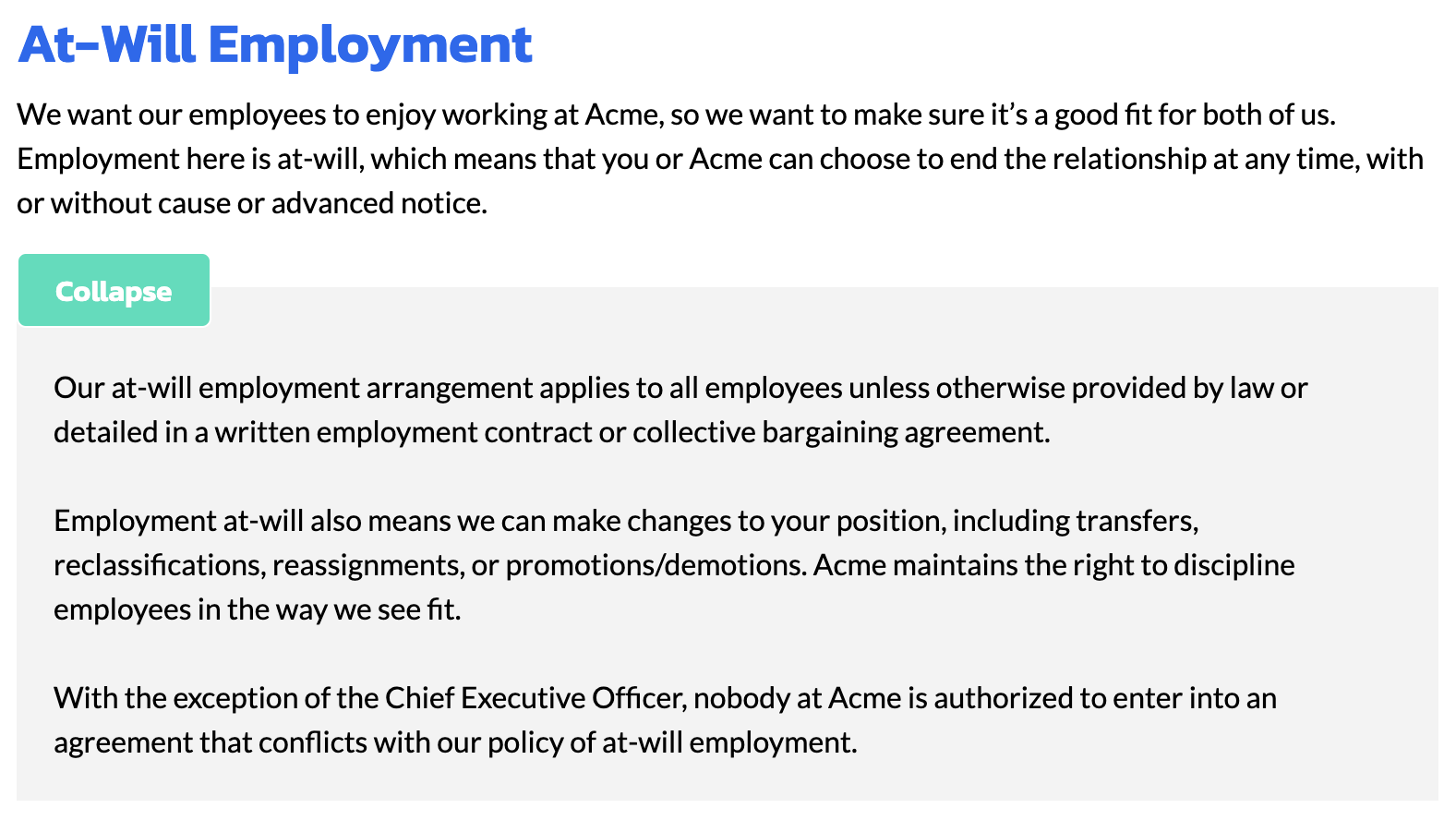
Most employee handbooks aren’t openly hostile, but many aren’t especially welcoming either.
They’re often packed with legal language, rigid phrasing, and worst-case assumptions about employee behavior. Usually, that language comes from a well-meaning place: copy-pasted statute text, borrowed law firm templates, or attempts to “lock things down” just in case. Other times, it’s simply inertia.
The result is what we’d call adversarial HR policies.
You see it in phrases like “will result in discipline,” “the Company reserves the right,” or “failure to comply may lead to termination.” The tone is transactional and one-sided. HR appears mainly as an enforcement mechanism, not as a guide or partner. This approach can feel safer and more compliant, but in practice it creates distance where clarity was the goal.
Policy language does more than describe rules. It shapes how people respond when something goes wrong. When policies read like contracts instead of explanations, employees are more likely to approach issues defensively or escalate quickly. Managers, meanwhile, may feel boxed in, applying rules mechanically instead of using judgment the law often allows.
Those dynamics carry real costs. Trust erodes. Small issues harden into formal disputes. HR spends more time policing than problem-solving. And while adversarial policies can reduce certain risks, they can also invite others by priming people to treat disagreements as legal problems instead of human ones.

Fixing this doesn’t require sacrificing compliance. It requires translating the law into clear, human language, explaining both employee rights and employer expectations, and writing policies that portray HR teammates as trusted guides who help employees and managers navigate complex compliance terrain.
What Makes an HR Policy “Adversarial”?
Adversarial policies are rarely written with bad intent. Most start out as an attempt to be careful, compliant, and protective. Over time, though, that caution can drift into something else entirely: language that assumes conflict, expects mistakes, and treats every situation like it might end up in a dispute.
Here are the most common signs:
Policies that sound like statutes, not explanations
If large chunks of your policy are copied directly from the law, that’s a red flag. Legal text is written to define minimum requirements and limit liability, not to help employees understand their rights or managers understand how to apply the rules day to day. When policies mirror statutes word for word, employees are left guessing what actually applies to them, and managers are left without guidance on how to handle real situations consistently and legally.
Language that jumps straight to enforcement
Phrases like “will result in discipline” or “will be considered job abandonment” leave no room for context, even when the law allows it. Compare that to “may result in discipline” or “may be subject to corrective action, up to and including termination.” The difference isn’t softness, it’s accuracy. Absolute language can feel threatening and often overstates what the policy actually requires.
Transactional framing that puts distance between people
Constant references to “the Company” and “the employee” make policies feel cold and contractual. That framing subtly positions HR as an enforcer instead of a resource. Thoughtful use of “we” and “you” can make policies easier to read and more human, without undermining enforceability or professionalism.
No visible flexibility, even where judgment is allowed
Some policies are written entirely in black and white, even when the law allows discretion. There’s no acknowledgment of good-faith mistakes, no explanation of how decisions are made, and no sense that anyone will pause to understand the situation before acting. Employees don’t experience that as fairness, they experience it as waiting to be caught.
HR positioned as a gatekeeper, not a guide
Adversarial policies often frame HR as a gate that employees have to go through, not as guides who can help them navigate complex laws and rules.
- “If you don’t provide the requested documentation, we can deny your leave” feels like a personal threat from Jake the HR manager. Compare to: “If the requested documentation is not provided, your leave request may be denied.” which feels more like a friendly head’s up.
- “We may require reasonable documentation” makes it sound like Janet the HR director might just decide on a whim if she wants to see more information. Compare that to: “Reasonable documentation may be required.”
Same rules, very different signals about intent and support.
Example spotlight: Leave policies that jump straight to “job abandonment”
A common example shows up in FMLA and general leave policies that state an employee who doesn’t return on their first scheduled day back will be considered to have abandoned their job. Even if legally defensible, that language assumes the worst immediately. A more human approach explains the process: the company will attempt to make contact, provide a short window to respond, and outline what happens if there’s no communication. The business is still protected, but the policy doesn’t lead with punishment.
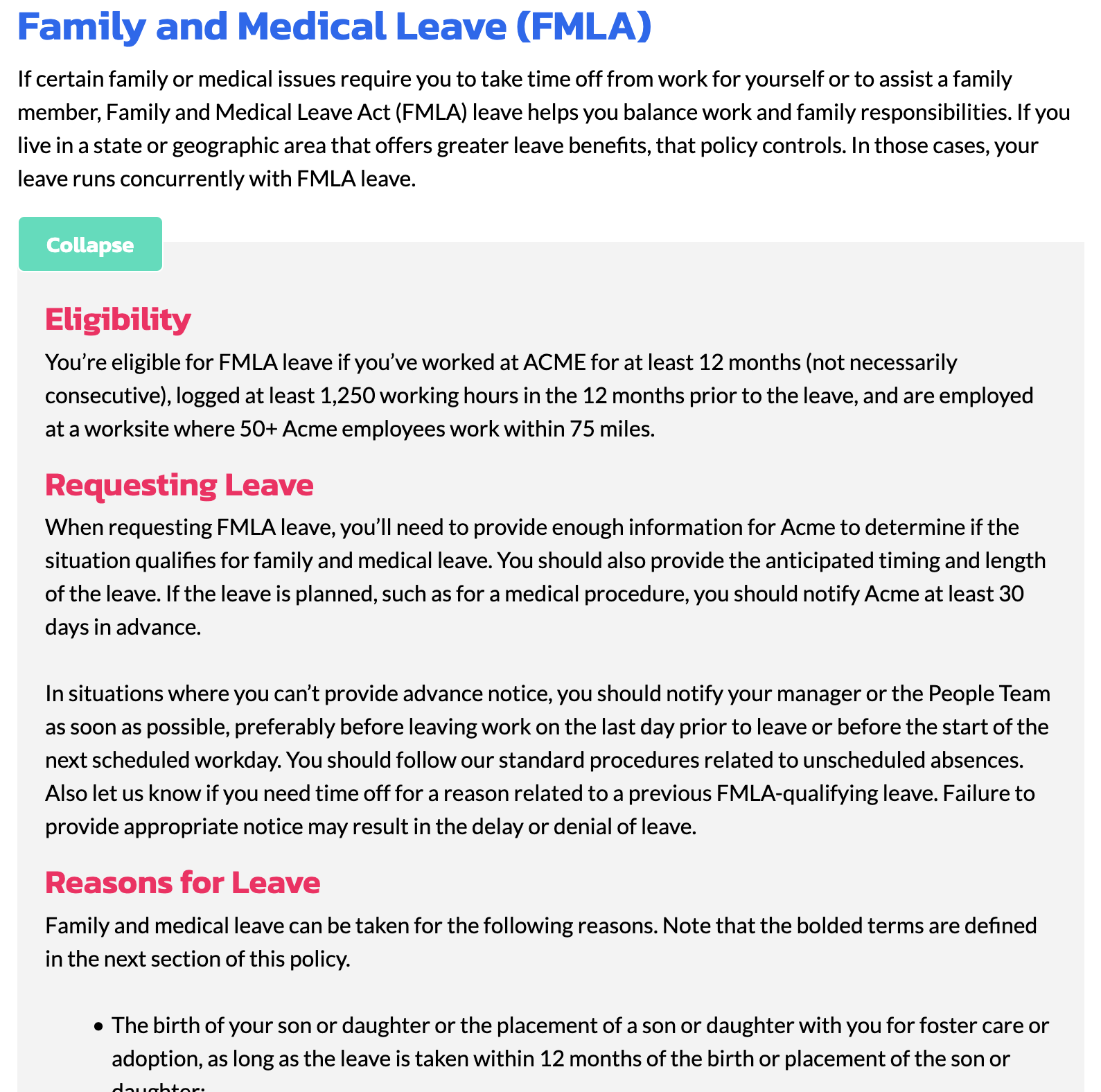
If any of this sounds familiar, you’re not alone. Many organizations end up with adversarial HR policies by default, not by design. The real issue is what those policies quietly teach employees to expect, and how that shapes their behavior when something goes wrong.
Why Tone and Language Matter More Than You Think
HR policies don’t just communicate rules. They shape how people interpret situations, especially when something goes wrong.
The language employees read in a handbook becomes a reference point. It influences whether they approach an issue openly, cautiously, or defensively. When policies are written in rigid, legal-sounding language, employees are more likely to respond in kind, thinking in terms of risk, loopholes, and self-protection. When policies sound like contracts, people tend to behave as if they’re in a contractual dispute.
Put simply, legalese invites legalese.
If a handbook reads like it’s preparing for conflict, employees subconsciously prepare for one too. That doesn’t mean they’re looking to cause trouble. It means they’re bracing themselves for how they expect to be treated.
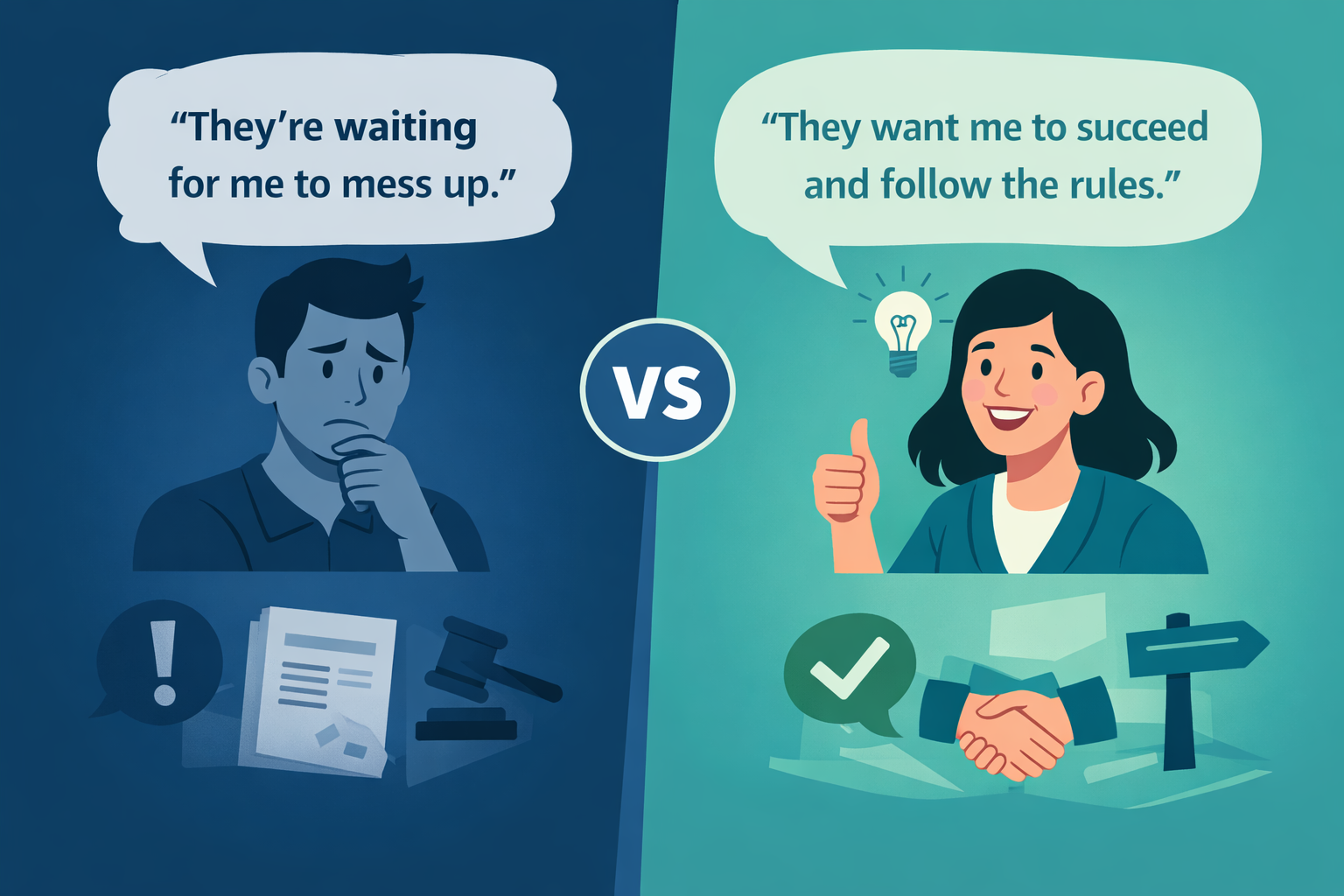
“Trap” vs. “guardrail” thinking
The same policy can send two very different signals.
- “They’re waiting for me to mess up.”
- “They want me to succeed and follow the rules.”
Adversarial wording pushes employees toward the first mindset. Policies feel like traps, one misstep away from a harsh outcome. More thoughtful, plain-language policies act as guardrails instead. They still set expectations and consequences, but they also communicate fairness, context, and a willingness to resolve issues before they escalate.
That difference matters most in moments of stress, when someone is already anxious, confused, or worried about getting in trouble. Tone shapes how those moments unfold.
Trust is built through words, not intentions
Employees can’t see the legal review process or the good faith behind a policy. They only see the final words on the page.
Those words shape whether employees approach HR openly or defensively when issues arise.
When employees feel respected and informed, they tend to ask questions earlier, raise issues sooner, and work with HR instead of bracing for HR. That cooperation reduces friction and, over time, reduces risk, not because the company became softer, but because the handbook stopped sounding like it was written for a fight.
The Reciprocity Problem in HR Policies
There’s a simple behavioral truth at play here: people are more likely to cooperate when they feel something has been offered first.
That “something” doesn’t have to be a benefit or a concession. It can be clarity, fairness, or a sense that the policy was written with real people in mind.
Many HR policies ignore this entirely.
When policies offer nothing but requirements and consequences, employees tend to approach them cautiously and defensively. That response isn’t surprising. It’s how people react when the relationship feels one-sided.
What policies quietly miss
Policies also miss subtle opportunities to shape how employees feel in difficult moments. This shows up most clearly in sections dealing with discipline, performance concerns, leave (especially leaves that give employees time away to deal with life’s toughest moments), or documentation.
Thoughtful language can make a stressful topic feel less intimidating without promising outcomes. It can explain what happens next, clarify expectations before someone is in crisis, and preserve dignity when someone’s already under pressure.
That effort signals something important: you’ve thought about the employee experience, not just legal exposure.
What “giving” actually looks like

Giving doesn’t mean lowering standards or avoiding consequences. It means balancing expectations with support.
That might look like explaining the “why” behind a rule so it feels reasonable instead of arbitrary. It might mean outlining the process before listing consequences. It might mean writing policies as guidance first, enforcement second. When policies give a little, employees are far more likely to give back in the ways organizations actually want: good-faith compliance, cooperation, and a willingness to work through issues together instead of escalating them.
The Branding Opportunity Most Companies Miss
Most organizations don’t think of HR policies as a branding tool. They treat them as documentation; something that only needs to be accurate, compliant, and complete.
In practice, an employee handbook is one of the first and clearest signals employees get about what it’s actually like to work at a company, especially for new hires who haven’t yet built context or trust. Tone, word choice, and how policies handle gray areas quietly communicate what the organization values and how it treats people when things aren’t perfect.
If policies are adversarial, employees tend to take those signals more seriously than mission statements or values pages. A handbook that reads cold and contractual tells people that risk management comes first, even if the company says otherwise.
Policies don’t just reflect culture, they reinforce it. Thoughtfully written policies can encourage trust and ownership from the start. Adversarial ones often encourage caution, minimal compliance, and a focus on avoiding mistakes rather than doing good work.
How Adversarial Policies Can Increase Risk
The intent behind adversarial policies is understandable. The problem is that overly defensive language can increase the likelihood that everyday issues turn into formal disputes, which is where costs and risk actually spike.
When small issues escalate
Policies that jump straight to absolutes and consequences create friction instead of resolution. Employees are less likely to ask informal questions and more likely to treat the handbook as a shield. That’s when HR hears more “I’d like to talk about my rights” instead of “Can you help me understand this?”
When people feel cornered, they stop trying to solve the problem and start trying to protect themselves.
Human-centered policies tend to produce the opposite pattern. They make expectations clear, outline a reasonable process, and communicate that issues will be handled consistently and fairly. That reduces uncertainty, which reduces escalation. Employees raise issues earlier, HR has more room to resolve them, and fewer situations turn into complaints, investigations, or legal involvement.
Flexible language isn’t the same as non-compliance. “May” language, process-oriented explanations, and context-aware phrasing can be fully compliant and often more accurate to what the law actually allows.
What a Non-Adversarial Policy Approach Looks Like
A non-adversarial approach doesn’t mean being vague or permissive. It means writing policies that do what they’re meant to do: set expectations, guide behavior, and reduce confusion before problems start.

That approach shows up consistently in a few ways.
- Policies start with “why,” so employees understand and align with the intent before moving into rules, expectations, and/or limits.
- Policies use clear, plain language that employees can understand on a first read. Fewer defined terms (and no big separate “definitions” list), shorter sentences, and explanations focused on what actually matters in practice.
- Rules are firm where the law requires it, and flexible where judgment is allowed. The policy reflects reality instead of pretending every situation is identical.
- Language reinforces shared responsibility. Thoughtful use of “we” and “you” signals that compliance is a joint effort, not a one-sided mandate.
- Processes assume good intent first. Instead of jumping straight to consequences, policies explain what happens next, who follows up, and what employees can expect if something goes wrong.
- The focus is guidance, not threats. The goal is to help people make good decisions, not scare them into compliance.
What this looks like in practice
Before:
- “If you do not return to work on your first scheduled day following approved leave, you will be considered to have abandoned your job.”
After:
- “If you’re unable to return to work on your scheduled return date following approved leave, please contact us as soon as possible. We’ll make reasonable efforts to reach you to understand your situation and discuss next steps. Failure to respond after multiple attempts may be treated as job abandonment.”
The second version still protects the business. It’s also clearer, more human, and far less likely to trigger a defensive reaction before a conversation even starts.
Compliance Without the Cold Shoulder

Compliance and humanity aren’t tradeoffs. Policies that are clear, fair, and grounded in real-world application tend to reduce misunderstandings and de-escalation, not increase risk.
The goal isn’t softness. It’s durability. Policies that hold up in practice preserve trust, support consistent decisions, and keep everyday issues from turning into formal disputes. That’s what effective, modern compliance actually looks like.
Final Thoughts
Adversarial HR policies often feel safer because they’re formal and tightly controlled. In practice, they can increase friction and escalate routine issues. Employee handbooks are behavioral tools, not just legal documentation, and policies written to guide rather than threaten tend to reduce conflict and work better in the real world.
If your handbook hasn’t been revisited with that lens in mind, it may be time. Blissbook helps organizations design and update policies and employee handbooks that are clear, compliant, and human, without sacrificing protection. Request a demo to see how we bring it all together.

Angeli Pacatang
Angeli has spent two years at Blissbook helping to create clear, engaging content about HR policies and employee handbooks. Before joining Blissbook, she worked as an HR manager in the Philippines for several years, giving her firsthand experience with the challenges HR teams face. Angeli combines her practical HR background with thoughtful research and writing to make complex policies easier to understand.