Every HR team knows the routine. You send out a new policy, then spend the next few weeks chasing signatures, sending reminders, and feeling like the “policy police.” It’s necessary work, but it’s not exactly the part of the job anyone looks forward to.
The good news? There’s a smarter way. Modern HR teams are using digital tools and thoughtful design to achieve policy compliance automatically. The right approach turns compliance from a manual task into a seamless process that runs in the background, freeing HR to focus on people instead of paperwork. In this article, we’ll look at seven practical ways to achieve policy compliance without the constant hassle or nagging. From making policies accessible and personalized, to automating reminders and involving managers, you’ll see how the smartest HR teams get it done.
Every HR leader knows the feeling. You’ve poured time into crafting a thoughtful employee handbook, yet months later it’s gathering digital dust or sitting untouched. Employees either forget it exists or avoid it because it feels irrelevant, outdated, or just plain hard to read.
The truth is, an employee handbook becomes far more valuable when employees actually engage with it. When employees don’t use the handbook, its ability to build alignment, answer questions, and support the company is limited. The challenge, then, isn’t just writing a handbook; it’s creating one that feels alive, approachable, and worth revisiting.
This guide will walk you through the essential elements of a handbook employees actually want to use, from keeping policies current to making the experience engaging and culture-driven. And yes, tools like a digital employee handbook platform (oh, hello Blissbook) can make this process smoother, smarter, and far more effective.
Your employee handbook is one of the most important tools your company has. It sets expectations, explains benefits, supports compliance, and helps new hires feel at home. While some organizations see it as a simple checkbox for signatures, others recognize it as a chance to genuinely connect with employees, and design plays a big part in making that happen.
After all the work you’ve put into getting the content right, it’s worth making sure people actually want to engage with it. Poor formatting, dense text, or clunky layouts can quietly get in the way of clarity, trust, and usefulness.
But when the design is thoughtful and aligned with your culture, your handbook becomes something more: a tool that unites your team, reinforces your values, and supports real understanding. That’s the thinking behind the psychology of Blissbook, where design based on the insights of behavioral economics makes handbooks more effective and human.
Design isn’t just about fonts or colors. It’s about accessibility, readability, and how well your policies connect with people. A well-designed handbook invites engagement and makes the information inside easier to absorb.
In the sections that follow, we’ll look at seven of the most common employee handbook design fails and how to fix them. Whether you’re building a handbook from scratch or refreshing your current one, these tips will help you turn a static document into a branded, engaging resource your team will actually want to use.
To announce a new employee handbook, send a clear message explaining what it covers, why it matters, and how to sign off. Use the email template below.
Clear communication is always important, but especially so when it comes to your HR policies and employee handbook, which serves as a comprehensive resource outlining company policies, procedures, and expectations for both employees and employers.
In this article, we’ll delve into the significance of announcing the release or updates of an employee handbook and provide you with practical tips on how to effectively make this announcement. From ensuring awareness to fostering understanding, we’ll explore the steps necessary to make your employee handbook rollout a success.
Employee handbook services come in two kinds: people who write the handbook for you (HR consultants, HR firms and employment attorneys) and software that helps you build and maintain it yourself. The best employee handbook builders and software are Blissbook, SHRM, SixFifty, BLR, and Handbooks.io. Each one helps you create a compliant, on-brand employee handbook far faster than starting from scratch, and this guide compares their features, pricing, and best use cases so you can choose the right one.
Whether you need a free employee handbook maker, a full-featured employee handbook software platform, or a legally vetted template builder, the right tool saves you hours and keeps your policies current. Below, we cover when to hire a writing service instead, what to look for, and then review the top five tools for 2026.
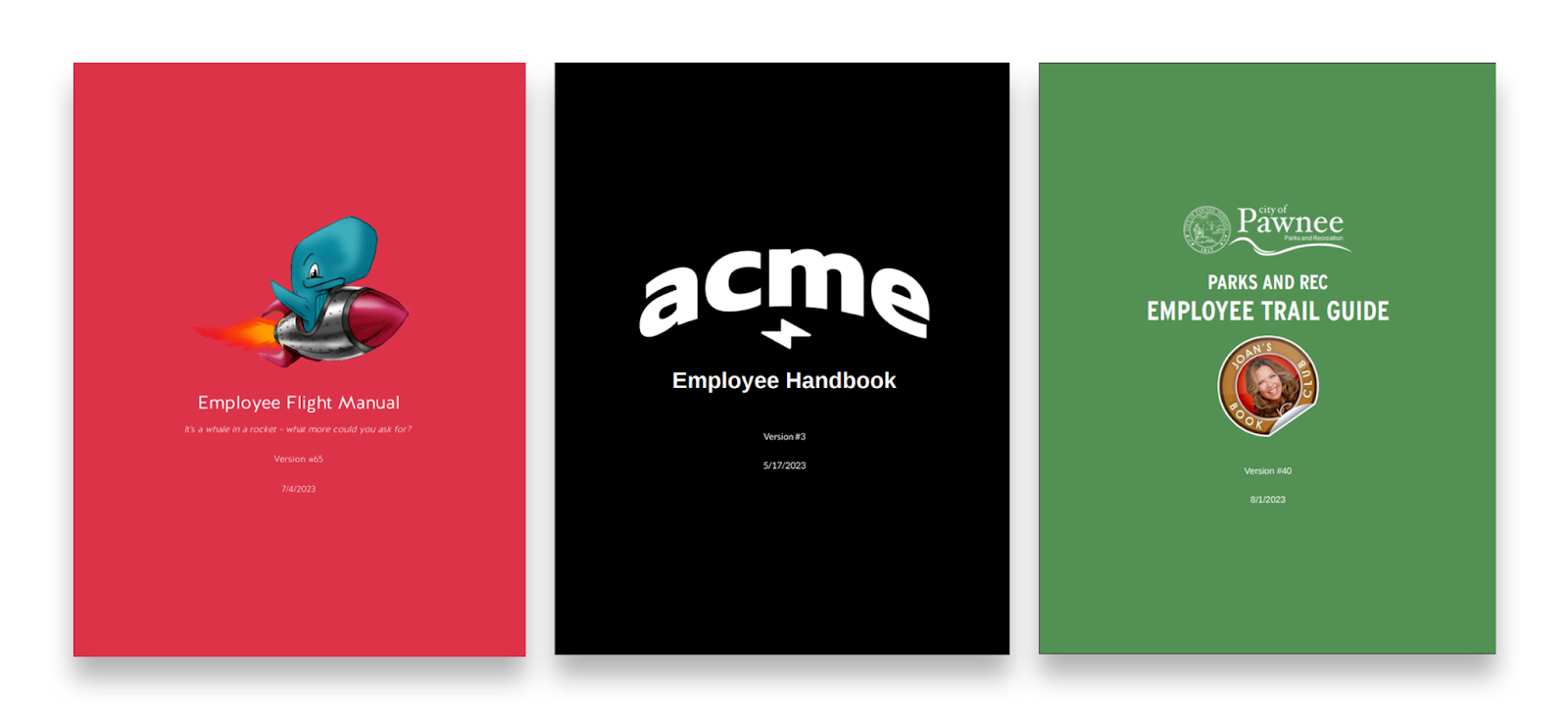
An effective employee handbook cover page includes your company name, logo, document title, and brand colors. See examples and templates below to design yours. Crafting the right cover page for an employee handbook isn’t just about slapping on a logo and a title and calling it a day. The first glance sets the tone for the entire document. Your cover page offers a glimpse into the company’s culture and emphasizes the importance of the content inside.
In this article, we’ll guide you through the details of designing a memorable yet professional cover. We’ll examine the essential elements every cover should have, discuss why your cover page is important, and provide real handbook cover page examples.
By the time you’re done reading, you’ll be equipped with the knowledge to design a cover page that resonates, informs, and impresses.
Your employee handbook can (and should) be more than a yawn-inducing document that outlines your company’s policies and procedures. What if, instead, you viewed your handbook as an opportunity to show employees you care—that they matter?
If you want to create a handbook that people actually read—and maybe even enjoy—you’re in the right place. Let’s take a look at how you can turn your company’s handbook into an engaging, informative resource.
Your employee handbook is critical to your company’s success. An effective handbook details everything from culture and values to day-to-day expectations to policies that help ensure compliance with employment laws.
Since it’s vital that employees read your handbook, you should make it as simple as possible to access. So, if you haven’t considered moving your employee handbook online, you should — and not just because that’s what we do here at Blissbook.
In this article, we’ll discuss handbook creation, highlight the perks of going online, and provide some factors to help you choose a platform.
A CEO welcome message is the opening letter in an employee handbook that shares the company’s mission, values, and culture in the leader’s voice. Below are tips, real examples, and a customizable template.
Imagine receiving a heartfelt message from the company CEO on your first day at a new job. When properly executed, this message has the power to make a strong first impression.
Employee handbooks introduce new hires (and reintroduce existing employees!) to your company culture, policies, and expectations. By integrating a personal message from the CEO, you can make everyone feel more welcome.
A CEO greeting communicates your company culture while showcasing leadership’s dedication. In this article, we’ll guide you through creating an effective CEO welcome message.
Here are 11 standout employee handbook examples, from Netflix’s culture deck to Valve’s handbook, each showing a different approach you can borrow for your own.
Say goodbye to the days of long, boring handbooks that evoked yawns and glazed looks from employees everywhere. There’s a whole world of outstanding and unputdownable employee handbooks that convey policies and procedures in a way that engages and ignites a sense of belonging among workers.
We’ve compiled 11 real-world examples to show you creative ways to present information and foster a positive work culture. Whether you’re creating a new employee handbook or revamping an existing one, these examples provide valuable inspiration and guidance.
Let’s dive into some exceptional employee handbooks and uncover what makes them stand out.