To create a welcome message for a new employee, greet them by name, add one detail that shows you wrote it for them, and tell them what happens next. The message doesn’t need to explain everything about the company. It needs to make the first interaction feel personal and point the new hire toward the information they’ll need next.
A welcome message is often the first touchpoint in onboarding. Your employee handbook can then give the employee a place to learn how the company works, including policies, expectations, and practical details they may need throughout their first weeks.
US labor laws change dozens to hundreds of times a year at the federal, state, and local level. If tracking those changes is part of your job, it can feel like the whole job. A rule changes in one state, a notice requirement shifts in another city, and suddenly the policies your team relied on last quarter are out of date.
Miss one update and you’ve got a handbook that no longer matches the law, plus legal risk nobody agreed to take on. And knowing a law changed is the easy part. You still have to figure out whether it applies to your organization and what needs to happen next.
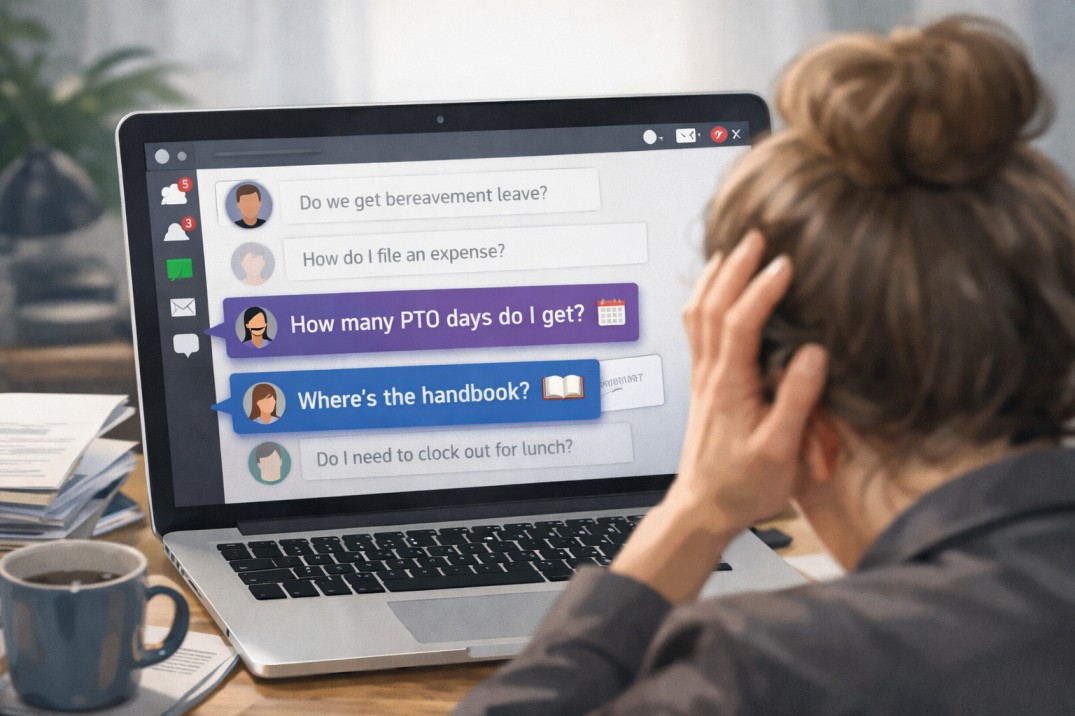
If that feels familiar, you’re not alone. Many HR teams pour serious time and effort into creating thoughtful, compliant handbooks, only to discover that employees aren’t actually using them. When employees aren’t reading the handbook, the issue isn’t laziness or resistance, it’s friction.
Maybe the document is hard to access. Maybe it feels overwhelming. Maybe it’s technically accurate but not especially engaging. Whatever the cause, low employee handbook engagement creates real risk. Confusion leads to inconsistent decisions, which can snowball into handbook compliance issues that cost time, money, and trust.
Let’s take a look at 10 clear signs your employees haven’t read your handbook, along with practical fixes for each one.
Your beautiful, branded, and intentionally “fun” PDF handbook project started with the right goals. For many teams, it’s a meaningful upgrade from the staid, legalese handbook employees barely touched. The content feels more human, the design reflects company culture, and the format is familiar. Teams choose PDFs because they know how they work and because a well-designed one genuinely feels more likely to be read (and a heck of a lot more fun to make).
The problem is what happens after that PDF is distributed. From that moment on, the content is frozen. Policies need ongoing updates as laws change, internal practices evolve, and expectations shift. A static file can’t keep up, and neither can a workflow that requires routing changes through a design team. Each update becomes a multi-step process, which encourages teams to delay changes so they can batch them together. In the meantime, employees are referencing information that’s already out of date.
This article breaks down the risks that come with relying on that beautiful PDF handbook with a custom layout, regardless of how polished or engaging it looks. You’ll see how this approach introduces friction, limits visibility, and increases compliance risk. Additionally, you’ll learn how modern HR teams are moving to a more flexible way of managing and sharing their policies (while keeping it on-brand and engaging).
Every HR team knows the routine. You send out a new policy, then spend the next few weeks chasing signatures, sending reminders, and feeling like the “policy police.” It’s necessary work, but it’s not exactly the part of the job anyone looks forward to.
The good news? There’s a smarter way. Modern HR teams are using digital tools and thoughtful design to achieve policy compliance automatically. The right approach turns compliance from a manual task into a seamless process that runs in the background, freeing HR to focus on people instead of paperwork. In this article, we’ll look at seven practical ways to achieve policy compliance without the constant hassle or nagging. From making policies accessible and personalized, to automating reminders and involving managers, you’ll see how the smartest HR teams get it done.
To create an employee handbook in Google Docs, start from a template, add each policy as a clearly titled section, then share it with view-only access. Below is the full step-by-step, plus when to move to dedicated software.
If your team is creating its first employee handbook, chances are you’ll start in a tool you already use every day. For many small or growing companies, that’s Google Docs. It’s free, familiar, and makes it easy to collaborate with managers or legal advisors without introducing new software. In those early stages, using Docs can feel like the simplest way to get your handbook project off the ground.
But here’s the catch: what works well for drafting and collecting input can quickly become clunky once your handbook needs to scale. Formatting gets messy, version control becomes confusing, and distributing a document to hundreds of employees isn’t as straightforward as hitting “share.”
We’re here to help. Let’s walk through the step-by-step process of creating an employee handbook in Google Docs, explore best practices to keep it professional and readable, and talk about when it makes sense to move beyond Docs into a more scalable, secure solution.
Every HR leader knows the feeling. You’ve poured time into crafting a thoughtful employee handbook, yet months later it’s gathering digital dust or sitting untouched. Employees either forget it exists or avoid it because it feels irrelevant, outdated, or just plain hard to read.
The truth is, an employee handbook becomes far more valuable when employees actually engage with it. When employees don’t use the handbook, its ability to build alignment, answer questions, and support the company is limited. The challenge, then, isn’t just writing a handbook; it’s creating one that feels alive, approachable, and worth revisiting.
This guide will walk you through the essential elements of a handbook employees actually want to use, from keeping policies current to making the experience engaging and culture-driven. And yes, tools like a digital employee handbook platform (oh, hello Blissbook) can make this process smoother, smarter, and far more effective.
Employees should re-sign the employee handbook after any material policy change and at least annually. Regular re-acknowledgement keeps your policies enforceable, and here is why. Do we really need to ask everyone to sign the handbook again? It’s a question HR teams ask often, usually after updating a policy, refreshing some language, or publishing a revised version of the employee handbook. And it’s a fair question! Getting signatures takes time and effort, and it interrupts your employees’ flow. Doing it too often can feel excessive, but skipping it altogether could leave your company exposed.
Here’s the good news: most handbook updates don’t require employees to re-sign. Minor wording tweaks, reorganized sections, and even moderate policy shifts can often be communicated without triggering a formal acknowledgment.
But there are moments when a re-sign is more than just a nice-to-have. Maybe you’ve made significant changes to your policies, moved to a brand-new platform, or had a major legal shift that affects how your employees work. In these cases, a new signature can help reinforce clarity, accountability, and compliance.
In this article, we’ll walk through exactly when employees should re-sign the handbook, when it’s overkill, and how to manage the gray areas in between. Because getting it right isn’t just about checking a box, it’s about protecting your people, your policies, and your peace of mind.
If you’ve ever stared at a confusing labor law and thought, “Could someone just tell me what this actually means?” good news! The Department of Labor is reviving a powerful tool that does exactly that.
After years on the shelf, DOL opinion letters are making a comeback, and this time, they’re expanding across five key agencies. That’s a helpful development for HR, legal, and compliance teams looking for more clarity in their day-to-day. These letters provide direct, customized employment law guidance straight from the DOL. In other words, real answers to real questions, backed by the agency that enforces the law.
Unlike general advisories or blog content, these are official interpretations from the DOL that can guide labor law compliance and support employer decision-making.
The DOL’s 2025 update makes this resource more accessible and applicable across more agencies, giving HR and compliance teams a clearer path to federal guidance.
An employee handbook is a document you create; the law is what you must follow. A good handbook reflects the law in plain language rather than restating it. Below is how the two differ and how to keep your policies clear and compliant.
In many workplaces, employee handbooks and federal laws are treated as if they serve the same function. Both are associated with rules, expectations, and compliance, but they’re not interchangeable. An employee handbook is something you create. Federal laws are something you have to follow. Confusing the two can lead to unclear policies, missed legal obligations, and even liability.
This article breaks down the key differences between employee handbooks and federal law. You’ll learn what each one is for, how they interact, and why your handbook shouldn’t try to act like a legal code. By the end, you’ll know how to write policies that reflect the law without overwhelming your employees and how to avoid common mistakes that can trip up even well-meaning HR teams.