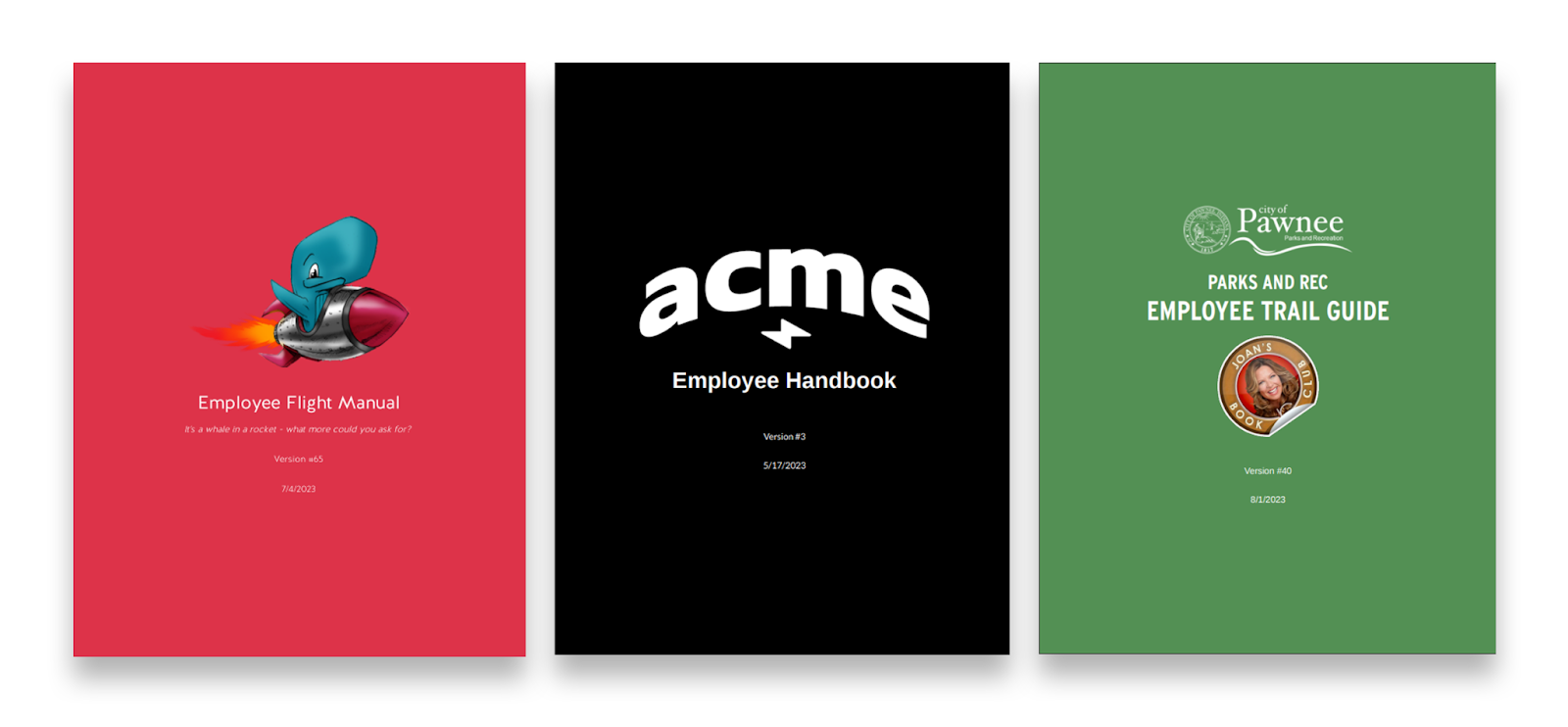
Employee handbook services come in two kinds: people who write the handbook for you (HR consultants, HR firms and employment attorneys) and software that helps you build and maintain it yourself. The best employee handbook builders and software are Blissbook, SHRM, SixFifty, BLR, and Handbooks.io. Each one helps you create a compliant, on-brand employee handbook far faster than starting from scratch, and this guide compares their features, pricing, and best use cases so you can choose the right one.
Whether you need a free employee handbook maker, a full-featured employee handbook software platform, or a legally vetted template builder, the right tool saves you hours and keeps your policies current. Below, we cover when to hire a writing service instead, what to look for, and then review the top five tools for 2026.
Your employee handbook is more than just a simple document. In short, an employee handbook can cost anywhere from nothing with DIY templates to $10,000 or more with a lawyer, and most companies land between $100 and $5,000. It guides employees through the company’s culture, policies, and expectations. Creating an effective employee handbook is crucial for setting the right tone and ensuring smooth operations within any organization. However, one of the first questions that arise when embarking on this task is: How much does it cost to create an employee handbook? This question is particularly important for new businesses and small enterprises that need to manage their resources wisely.
The answer, as always, is “it depends”. It can be anywhere from free to $10k.
In this article, we’re going to walk you through all the different ways you can create an employee handbook and how much one might cost you. Whether you decide to do it all by yourself or think about getting some pros to help out, we’ll cover what you need to know to make a choice that fits what you need and what you can afford. Let’s dive in and start figuring out the best way to get your employee handbook off the ground without emptying your pockets.
Chances are you’re on the hunt to make your employee handbook a genuine guide that protects your team and your business, not just a snooze-fest of dos and don’ts. This ideal handbook goes beyond rigid rules; it’s a dynamic guide that reflects your company’s mission and values and supports your employees.
Why does it matter? Aside from shielding your company against legal disputes, a well-constructed handbook indicates that your company isn’t just going through the motions of legal compliance. It tells your team that their rights matter, they’re working in a company with purpose that respects and honors those rights, and it ensures everyone’s on the same page about what’s cool and what’s not at work.
Stick with us as we walk you through the required laws for your handbook, ensuring you’re ticking all the legal boxes while also keeping things approachable and relatable for your team of non-lawyer humans. Your handbook shouldn’t just be legally compliant; it should be a user-friendly resource that everyone in your company understands and values.
Though you may think of employee handbooks as an HR thing, it’s best to solicit input from various departments, like your executive leadership team, IT, and legal counsel. Collaboration helps ensure your handbook content is accurate and properly reflects your company culture.
So, how do you manage the collaboration and approval process without getting overwhelmed?
An employee handbook disclaimer is a short statement clarifying the handbook is not a contract and that employment remains at-will. Here is sample wording you can adapt.
This article is designed to familiarize you with how to create a disclaimer for your employee handbook. Although it is quite comprehensive, it does not cover 100% of all situations you may find yourself in.
We want you to enjoy reading this article, and a big part of that is making sure it’s a good fit for you and for us. With that in mind, your time here is at-will, meaning you can browse to another website at any time, and we can shut down this blog at any time, with or without cause or prior notice. Reading this article does not form a contract between you and Blissbook, express or implied, although we’d be happy to make that happen.
People are indeed the worst.
Your company’s employee handbook should have a successful and effective disclaimer. If you have any questions, please contact us.
We are not liable if the information herein is TOO helpful in helping you craft a bulletproof yet culture-first disclaimer for your employee handbook.
Is this joke getting old yet? 😄 Let’s talk about your employee handbook disclaimer! A handbook disclaimer protects your company! It:
Ensures employees know your handbook is not 100% comprehensive
Informs employees how to get help with any of your handbook’s content
Reiterates employees’ at-will status
Makes it clear that your handbook isn’t an employment contract
Emphasizes that the policies within are subject to change
Renders all other versions obsolete
In this article, we’ll talk about why disclaimers are important, what your disclaimer should — and shouldn’t — include, and how to create an effective disclaimer for your employee handbook.
Leave these out of your employee handbook: contractual language, discriminatory or illegal policies, anything that conflicts with employment law, vague or inflexible rules, and outdated information. Below is what to omit and why.
Your handbook helps employees understand what your company is all about—from culture and values to the policies and procedures that make your workplace successful. Creating a helpful handbook means knowing what to include and, just as importantly, what not to include.
In this article, we’ll take a look at the employee handbook creation process and provide guidance on what topics to cover and what to avoid.
Want to craft an employee handbook that’s more than just rules? One that really speaks to your employees and showcases your company’s spirit? We’ve got you covered.
In this article, we’ll talk about how to design an effective employee handbook, including best practices and key considerations to make it informative and engaging.
Your employee handbook is critical to your company’s success. An effective handbook details everything from culture and values to day-to-day expectations to policies that help ensure compliance with employment laws.
Since it’s vital that employees read your handbook, you should make it as simple as possible to access. So, if you haven’t considered moving your employee handbook online, you should — and not just because that’s what we do here at Blissbook.
In this article, we’ll discuss handbook creation, highlight the perks of going online, and provide some factors to help you choose a platform.
An employee handbook covers everything from your company culture to day-to-day policies and information related to legal compliance. A good employee handbook reduces uncertainty, maintains consistency, and helps resolve conflict.
A table of contents makes your employee handbook easy to navigate. Even better, an electronic or digital employee handbook can include a table of contents with clickable links, making it even easier for employees to navigate to the specific information they need.
By the end of this article, you should know why you need a table of contents and how to create one.
Every employee handbook should include an at-will disclaimer, equal-opportunity and anti-harassment policies, health and safety rules, PTO and leave, benefits and pay, a code of conduct, technology use, and separation procedures. Below is the full checklist.
Your employee handbook serves as a guide for both new and existing employees, helping them navigate the company with ease. Creating an employee handbook may seem overwhelming at first, but we promise it’s worth the investment.
To make your life easier, we’ve outlined the policies you should include in your employee handbook.