10 Signs Employees Haven’t Read the Employee Handbook (and What to Do About It)
You did the work. You reviewed policies, aligned with legal, cleaned up outdated language, maybe even refreshed the design. You rolled out the updated employee handbook with a clear announcement. Everyone acknowledged it. Well, almost everyone.
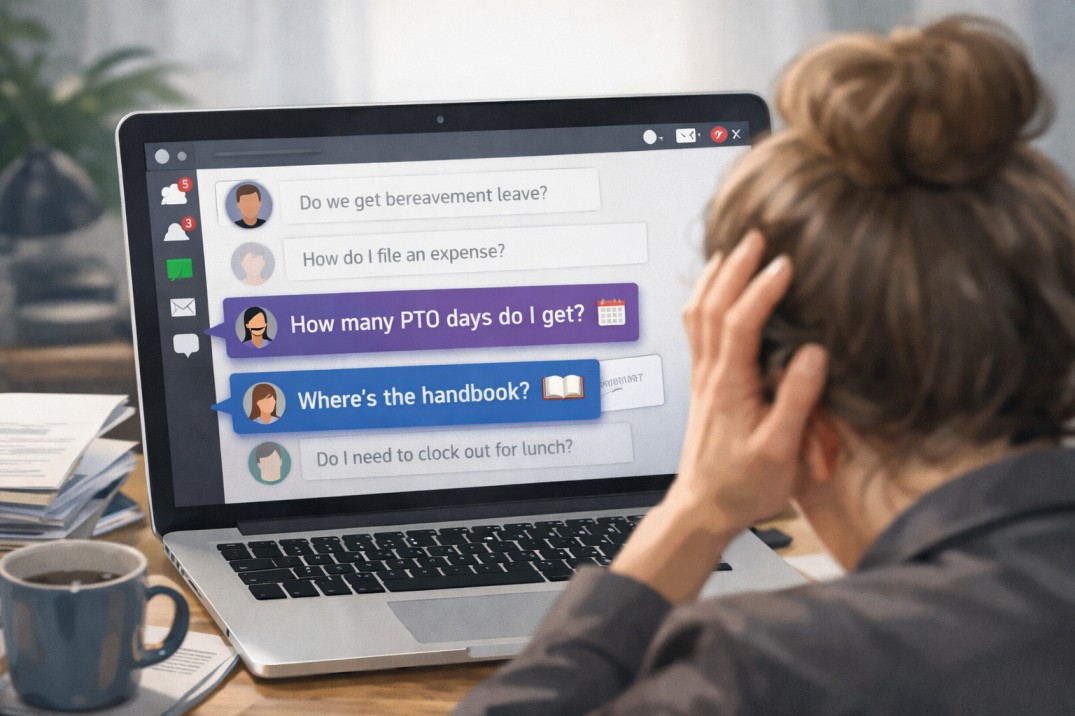
And then the questions started:
- “Wait, how many PTO days do we get?”
- “Are we allowed to work remotely on Fridays?”
- “That was a policy? I didn’t know that.”
If that feels familiar, you’re not alone. Many HR teams pour serious time and effort into creating thoughtful, compliant handbooks, only to discover that employees aren’t actually using them. When employees aren’t reading the handbook, the issue isn’t laziness or resistance, it’s friction.
Maybe the document is hard to access. Maybe it feels overwhelming. Maybe it’s technically accurate but not especially engaging. Whatever the cause, low employee handbook engagement creates real risk. Confusion leads to inconsistent decisions, which can snowball into handbook compliance issues that cost time, money, and trust.
Let’s take a look at 10 clear signs your employees haven’t read your handbook, along with practical fixes for each one.
Sign #1: Employees Keep Asking Questions That Are Covered in the Handbook
Your HR team feels like a walking FAQ page:
- “How do I report an expense again?”
- “Do we get bereavement leave for extended family?”
- “Are we supposed to clock out for lunch or is it automatic?”
The answers are already spelled out in the handbook, yet the same questions show up in Slack, Teams, or email over and over.
When employees consistently bypass the handbook and go straight to HR, that’s one of the clearest signs employees aren’t using it.
What It Usually Means
This is typically a usability problem, not a motivation problem.
If employees can’t quickly search for what they need, access the handbook on their phone, or skim to the relevant section in seconds, they’ll default to the fastest path (asking you).
A static PDF buried in a shared drive does not encourage employee handbook engagement. It creates friction, which trains employees to treat the HR team as the primary source of truth instead of the handbook itself.
Make the Handbook Easier Than Asking HR
If you want the handbook to become the first stop, it has to be the easiest one.
Start by making your policies searchable. A searchable employee handbook allows employees to type “PTO,” “bereavement,” or “remote work” and get an immediate answer, without scrolling through 60 pages or guessing which section it might live under.
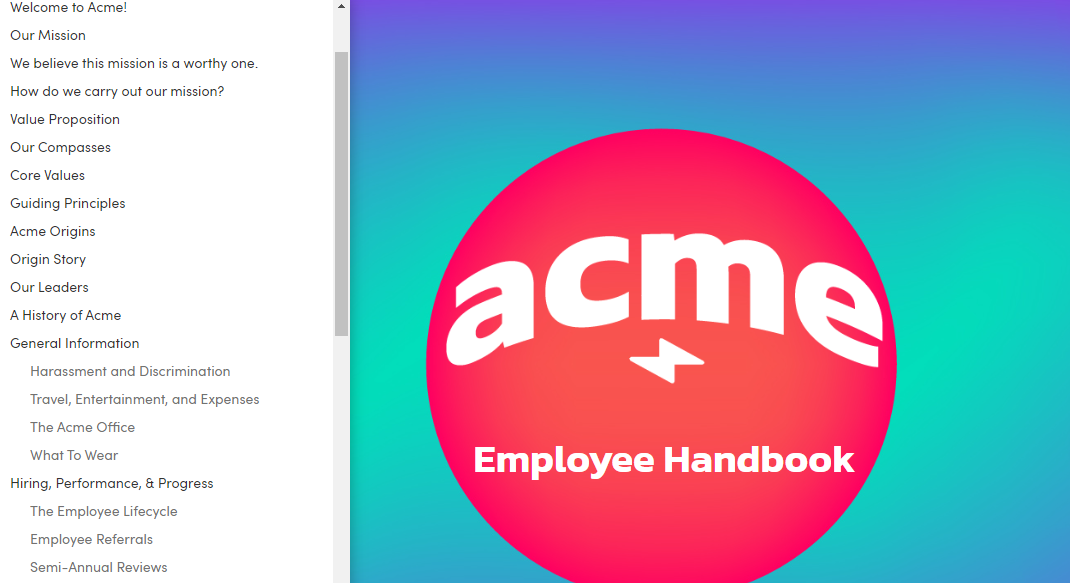
Structure matters, too. A clear, intuitive table of contents helps employees understand where to look before they even start searching. With Blissbook, your table of contents is generated automatically as you build your handbook, so you don’t have to manually maintain it. You can also override items when necessary, giving you flexibility without extra administrative work.
Next, make it mobile-friendly. Today’s workforce checks everything on their phones. If your handbook only works well on a desktop or requires a VPN login, engagement will drop fast.
Finally, use clear summaries at the top of each policy. Lead with a short explanation of the what and the why, then allow employees to dig deeper if needed. This wide-and-shallow structure makes policies far less intimidating and much easier to skim.
When the handbook is easy to search, easy to access, and easy to read, employees stop defaulting to HR for every basic question. Instead, the handbook becomes a practical, self-serve resource, which is exactly what modern digital employee handbook software is designed to support.
Sign #2: Managers Interpret Policies Differently Across Teams
An attendance issue in Department A results in a written warning.
The same issue in Department B gets a verbal reminder.
A remote work request is approved on one team and denied on another, even though the roles are similar.
When managers interpret the same policy in different ways, it creates confusion for employees, frustration for HR, and compliance risk for legal as inconsistent decisions can look like favoritism or unequal treatment.
What It Really Means
Inconsistent enforcement is often a clarity problem, not a leadership problem.
If policies are vague, overly legalistic, or buried in dense text, managers are forced to fill in the missing pieces themselves. Without clear expectations and shared context, each leader applies their own judgment. That may feel reasonable in the moment, but across teams, it can lead to inconsistent policy enforcement.
It can also signal a visibility issue. If managers are not regularly referencing the same version of the handbook, or if they are relying on memory instead of the written policy, alignment breaks down quickly.
Create Clarity and a Single Source of Truth
Start with plain language policies that clearly explain what’s expected, what flexibility exists, and where discretion applies. Managers shouldn’t have to translate legal jargon into practical guidance, the handbook should do that work upfront.
Next, structure policies so they handle both the general rule and the edge cases. A strong overview can explain the standard expectation, while expandable detail can address more nuanced scenarios. This approach keeps policies readable while still providing the depth managers need when situations become more complex.
Finally, make sure everyone is accessing the same single source of truth. One centralized, up-to-date handbook reduces the risk of outdated files, conflicting versions, or informal interpretations circulating across departments.
When policies are clear, accessible, and consistently referenced, you reduce confusion, protect against compliance risk, and build policy consistency across the organization. That kind of alignment strengthens trust between managers and their teams.
Sign #3: The Handbook Only Comes Up During Onboarding
The handbook is introduced on day one, acknowledged during onboarding, and then… it disappears.
It’s not referenced in team meetings, it’s not linked in internal communications, it doesn’t resurface during policy changes or company updates and, outside of onboarding paperwork, it rarely enters the conversation.
If the only time employees hear about the handbook is when they’re signing it as a new hire, that’s a strong signal it’s being treated as a one-time event instead of an ongoing resource.
What It Really Means
When a handbook feels like a legal formality, employees treat it like one. They skim, sign, and move on.
This creates a quiet gap. Policies exist, but they aren’t actively reinforcing expectations, culture, or compliance. Over time, that disconnect can lead to confusion, inconsistent enforcement, and avoidable risk.
A handbook should function as a living document, not a static onboarding artifact.
Treat the Handbook as a Living Resource
Start by reinforcing that the handbook evolves. When policies change, communicate those updates clearly and tie them back to the broader mission or operational need. Regular digital handbook updates signal that leadership is paying attention and that employees should, too.
This is where process matters. When you update your handbook, make it standard practice to notify employees. With Blissbook, for example, you can send customized email invitations when a handbook is launched or revised. You can tailor the subject line and message so employees understand what changed and why it matters. If updates are significant, you can guide employees to review specific changes within (with annotated guidance) instead of expecting them to hunt for differences.Reminders are just as important. If someone hasn’t viewed or signed, automated or manual reminders can be sent without HR chasing individuals one by one. Instead of relying on memory or spreadsheets, the system nudges employees for you.
Finally, make it easy to revisit the handbook at any time. When employees know they can quickly access the most current version, and when updates are clearly communicated, the handbook becomes part of the ongoing rhythm of the organization.
When employees see that the handbook is current, communicated, and consistently referenced, engagement increases naturally. It stops being a one-time onboarding form and starts functioning as a living guide for how work gets done.
Sign #4: Your Handbook Is a Static PDF Sitting on a Server
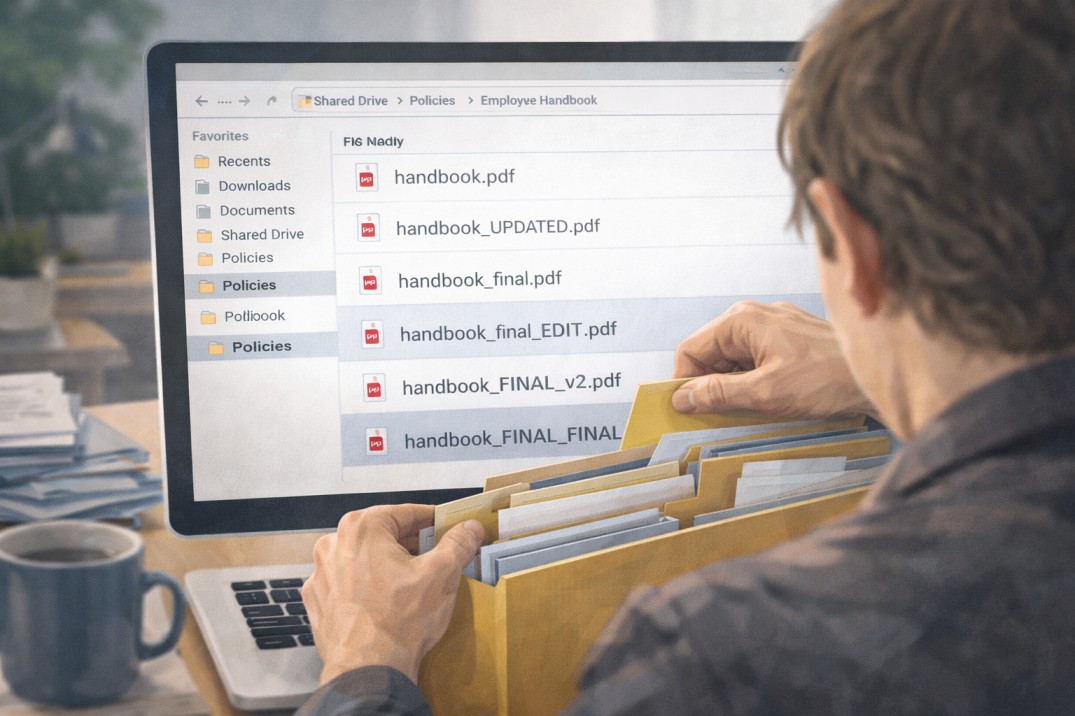
An employee asks where the handbook lives. Someone replies, “I think it’s in the shared drive.” Another says, “Didn’t we email it last year?” A third mentions needing to log into the VPN to access it.
If employees have to dig through folders, search old email threads, or jump through login hoops just to find your handbook, that’s a clear access problem.
When access is inconvenient, engagement goes bye bye.
What It Really Means
Access barriers quietly train employees not to bother.
A static PDF stored on a server might technically satisfy the requirement of “having a handbook,” but it does very little to encourage actual use. If the document is hard to locate, difficult to search, or clunky to read on a phone, most employees will default to asking their manager or HR instead.
Version confusion adds another layer of risk. When multiple PDFs circulate, employees may reference outdated policies without realizing it. That confusion can turn into handbook compliance issues, especially in multi-state environments where policy accuracy matters.
The result is predictable. The handbook exists, but it’s not functioning as a reliable, go-to resource.
Remove the Barriers
Start by moving away from static files towards a digital, 24/7 format, so your handbook is accessible from anywhere, at anytime.
Next, bring structure to your version management process. With traditional PDFs, “final_v3_updated_reallyfinal.pdf” is a running joke until it becomes a real risk. A modern online employee handbook platform allows admins to see a clear list of published versions in one place, and shows only the latest current version to employees.
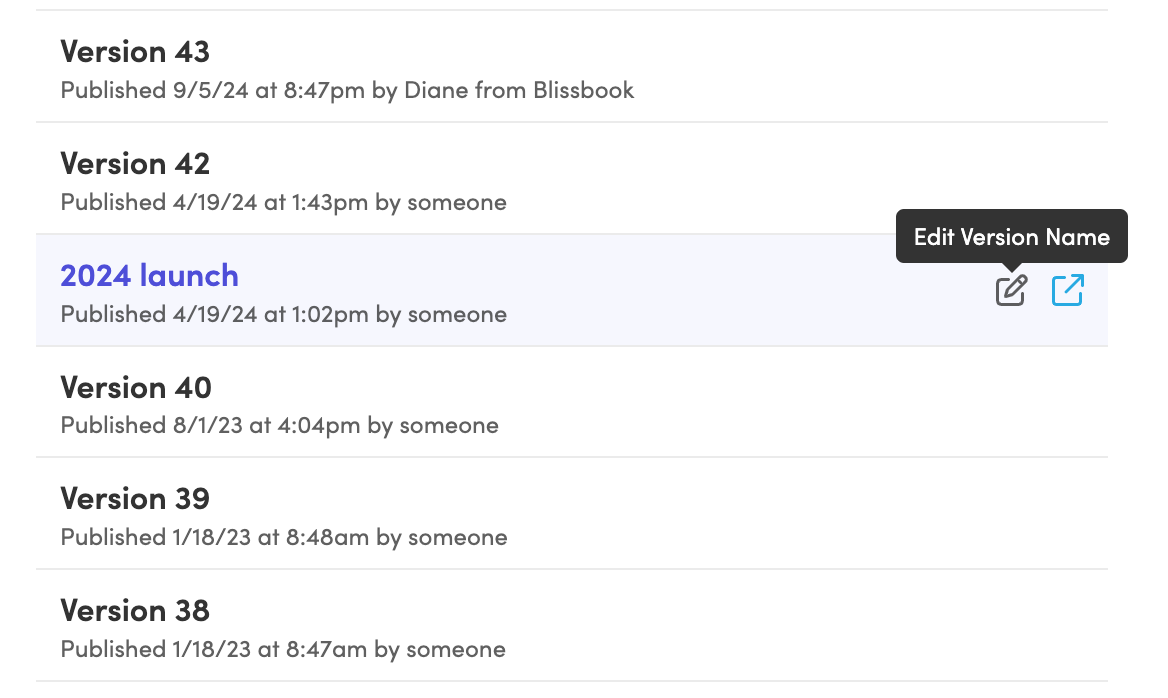
When access is simple and version control is organized, the handbook stops feeling like a static file and starts functioning like a managed system. That shift alone can dramatically improve engagement while reducing compliance risk.
Sign #5: Employees Say the Handbook Is “Too Long” or “Hard to Read”
You hear comments like:
- “It’s overwhelming.”
- “I don’t understand all this legal jargon.”
- “There’s just… a lot.”
Even if employees cannot articulate exactly what feels off, the message is that the handbook feels too heavy and unapproachable.
What It Really Means
This isn’t purely about page count, it’s about readability.
When policies are written primarily for legal defensibility instead of human understanding, they create distance. Long paragraphs, dense language, and technical phrasing make employees skim for keywords instead of actually absorbing expectations.
Over time, that disconnect weakens employee handbook engagement and increases the likelihood of misunderstanding.
Make Policies Clear, Then Layer the Detail
HR’s job is to translate the law for employees, not simply copy/paste statutes into a handbook and call it a day. If you’re wondering how to write a handbook employees will actually read, start with plain English. Employees don’t need statutory citations, they need to understand what a policy means for their day-to-day work.
Lead with a short, clear summary of the rule and its purpose. Then, provide additional detail only where necessary. This keeps the experience approachable without removing important nuance.Blissbook’s Read More feature supports this exact approach. You can surface a clean, easy-to-read overview and tuck the deeper legal language or edge-case scenarios behind expandable sections. Employees who want the quick answer get it immediately. Those who need more detail can explore further.
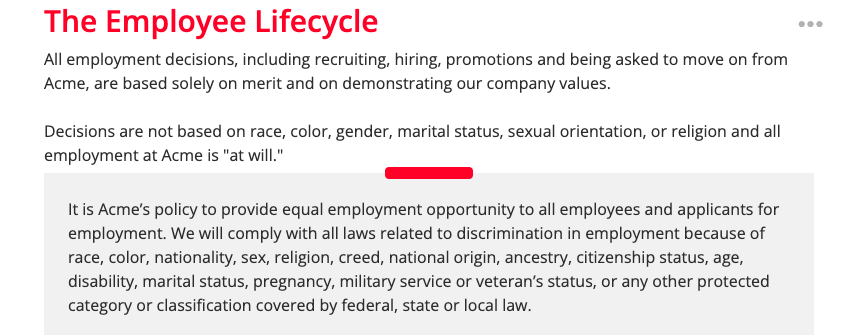
Finally, frame policies around the “why”. A time-off policy is about fairness and planning. A safety rule protects everyone. When employees understand the reasoning, policies feel intentional instead of restrictive.
Readable HR policies are not less compliant; they’re more effective because people can actually understand and follow them.
Sign #6: Employees Have to Scroll Through Policies That Don’t Apply to Them
Employees often encounter policies that do not apply to them. A salaried employee sees overtime rules for non-exempt roles, a remote worker reads policies for another state, and a part-time employee has to sort through irrelevant benefits.
When large portions of your handbook are irrelevant to the person reading it, engagement drops quickly.
What It Really Means
This usually happens when a handbook tries to serve every role, state, and employment type in one long, uniform document.
From an HR perspective, that feels efficient. From an employee perspective, it feels overwhelming.
In multi-state environments especially, this can also create compliance risk. If employees are unsure which policies apply to them, misunderstandings are almost guaranteed.
Make the Handbook Feel Personal
Instead of showing every policy to every employee, personalize what they see.
A personalized employee handbook allows you to tailor content based on factors like work location, employment type, department, or role. That way, a California employee sees California-specific policies. A part-time worker sees the benefits rules that apply to them. A manager sees leadership expectations that individual contributors don’t need.Blissbook’s Personalized Content functionality supports targeting like this and lets you limit entire chapters, specific policies, or even just a paragraph to the right audience.
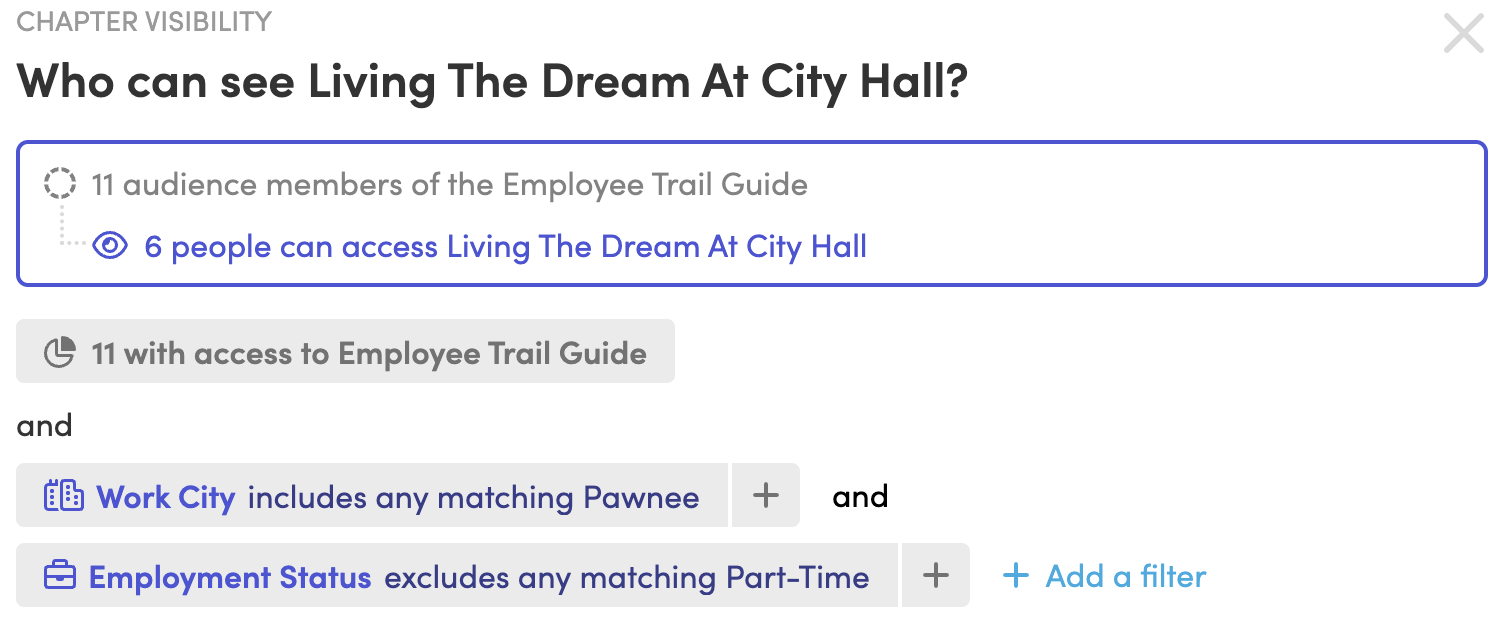
The result is a personalized experience for employees and relevant content for multi-state employee handbook compliance.
Pair that personalization with a wide-and-shallow structure, clear summaries first and deeper detail only when needed, and your handbook becomes far more approachable. Employees spend less time filtering out irrelevant information and more time focusing on what they care about.
Relevance drives engagement. When employees see themselves reflected in the content, they are far more likely to read it.
Sign #7: Your Handbook Doesn’t Sound Like Your Company
If you removed your logo from the cover, could someone recognize the handbook as yours?
If the tone feels generic, overly formal, or completely different from how you communicate everywhere else, that’s suboptimal.
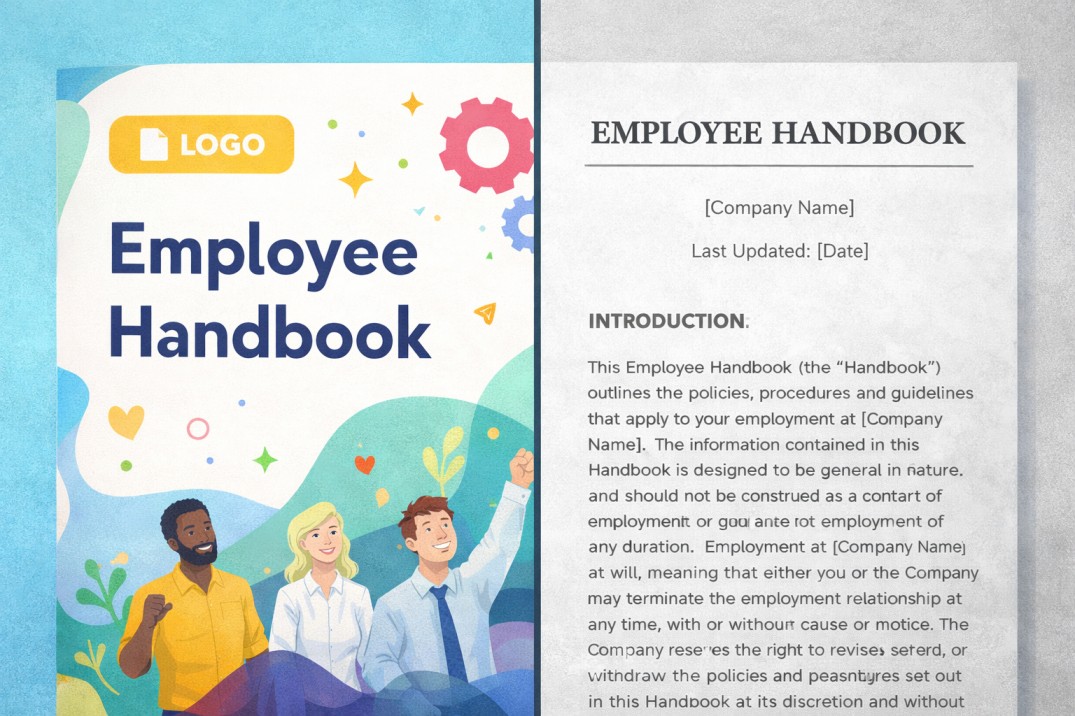
Maybe your company voice is warm and collaborative, but the handbook reads cold and clinical. Maybe your brand emphasizes innovation and trust, but the policies feel rigid and impersonal.
Guess what? Employees notice the difference and tune out right away.
What It Really Means
When the handbook doesn’t reflect your company culture, employees subconsciously separate it from the rest of the organization.
It feels like something written by lawyers, not leadership, which reduces engagement and means employees treat it as a legal requirement rather than an extension of your values and expectations. Over time, that weakens alignment and makes policies feel like rules handed down instead of shared commitments.
Align Policy With Culture
Start by adding a genuine welcome message from leadership. A short letter from the CEO can set the tone, explain the purpose of the handbook, and reinforce what the organization stands for. Some companies even include a brief welcome video, which makes the experience feel more personal and intentional.
Then carry that voice forward. Align policies with your stated values. If collaboration is a core principle, reflect that in how you describe communication expectations. If safety and respect are central to your culture, connect those values directly to your conduct policies.
A culture-first employee handbook doesn’t remove compliance language; it places it within context. It shows employees that policies are part of how your team succeeds together.
Sign #8: The Handbook Rollout Feels Like a Deadline, Not a Discussion
When your handbook is rolled out, is the main message something simple like: “Please review and sign by Friday.”?
There’s no explanation of what changed. No summary of updates. No context about why it matters. Just a deadline and a signature request.
If the acknowledgment process feels transactional, employees will treat it that way.
What It Really Means
When the employee handbook acknowledgment process is reduced to a compliance task, the focus shifts from understanding to completion. Employees sign because they have to, not because they’ve engaged with the content. The handbook becomes a hurdle to clear rather than a resource to use.
That dynamic weakens both engagement and defensibility. Yes, signatures are a must-have compliance tool, but a signature alone does not guarantee clarity or understanding.
Make the Acknowledgment Intentional
Instead of treating policy sign-off as a formality, frame it as communication.
When rolling out a new handbook or update, highlight what’s new or important. Call attention to changes that affect day-to-day work. Give employees a reason to pay attention before asking for a digital policy sign-off.
Design matters here, too. A clean, well-branded handbook signals that time and care were invested, and that perception influences how seriously employees take it.
Finally, separate the idea of “we need your signature” from “we want you to understand this.” When updates are introduced thoughtfully and employees see acknowledgment as part of a broader communication process, engagement increases naturally.Tools can support this approach. Blissbook’s annotations feature, for example, allows you to highlight key updates and add context directly within the handbook. Employees can step through those changes one by one, making it easy to understand what’s new without rereading the entire document.
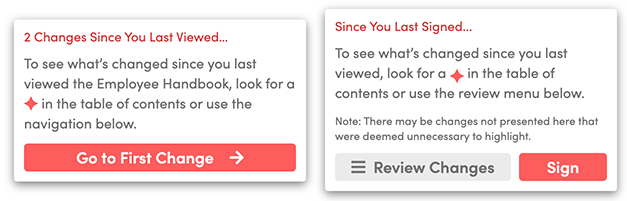
The goal is not just collecting signatures. It is reinforcing shared expectations in a way that feels deliberate, not rushed.
Sign #9: You Discover Outdated Policies Months Too Late
Outdated information surfaces in day-to-day use.
A leave policy does not reflect current state law. The effective date has not been updated in years. A benefits section references something the company no longer offers.
When these issues are discovered after the fact, it is a sign the review process is reactive rather than proactive.
What It Really Means
Handbooks don’t become outdated overnight. They drift. A small law change here. A procedural tweak there. A benefit update that never made it into the document.
Without a structured review cadence, updates happen only when something breaks. That creates unnecessary compliance exposure and undermines credibility. If one section is outdated, employees may start questioning the accuracy of the rest.
In multi-state environments especially, missed employee handbook compliance updates can escalate quickly.
Build a Proactive Review Rhythm
Start by establishing a regular review rhythm. Quarterly check-ins and an annual comprehensive review can help ensure policies stay aligned with both legal requirements and internal practices.Centralized policy management is a big help. A system like Blissbook’s Policy Library allows you to store and manage policies in one place, making them easier to organize, search, and update. Real-time collaboration and granular version history provide visibility into who changed what and when, which strengthens compliance documentation. Review and approval workflows, with automated policy expirations, add another layer of protection. By documenting who reviewed and approved policy updates, you create an auditable history of oversight. That record can be valuable during external audits or internal investigations, and it reinforces accountability within your team.
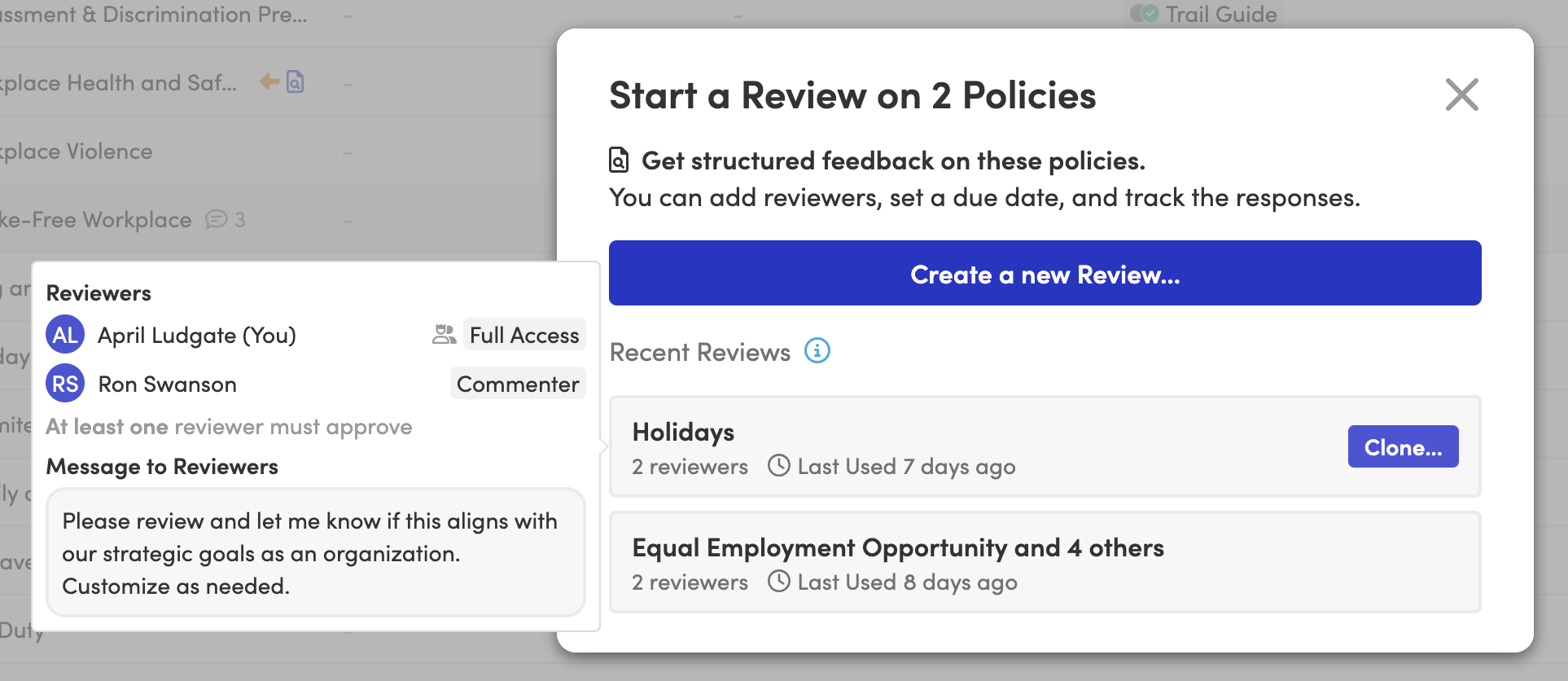
Finally, leverage reusable policies where appropriate. When a policy lives in one central location and can be inserted into multiple handbooks or documents, updates remain consistent across the organization.
A proactive governance framework keeps your handbook and policies healthy over time. It shifts policy management from scrambling after mistakes to confidently maintaining accuracy and compliance.
Sign #10: Managers Rely on HR to Interpret Every Policy
Managers frequently check with HR before applying policies.
Routine questions about attendance, time off, or employee conduct are escalated instead of handled at the team level.
If managers consistently depend on HR to interpret what policies mean, your handbook is not doing its job.
What It Really Means
When policies aren’t clear, accessible, or trusted as the authority, they become background noise.
Instead of guiding behavior, the handbook sits on the sidelines while HR becomes the translator. That creates bottlenecks, slows decision-making, and increases the risk of inconsistent enforcement across teams.
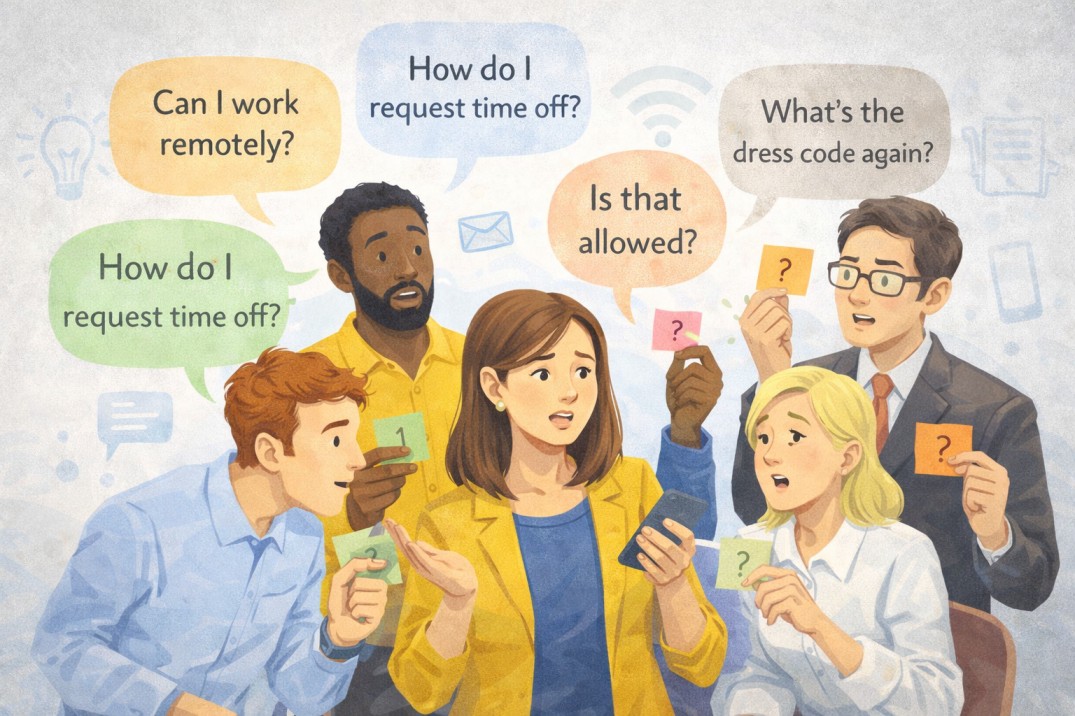
Over time, policy knowledge becomes person-dependent rather than system-dependent. If the answer lives in HR’s head instead of in the handbook, your org can’t scale.
Build a System Managers Can Rely On
A well-functioning handbook should empower managers to make consistent decisions with confidence.
That starts with clarity. Policies should outline expectations, boundaries, and areas of discretion in practical terms. Managers shouldn’t have to interpret vague language or rely on memory.
It also requires visibility. A digital employee handbook ensures managers are referencing the same up-to-date content as everyone else, not an old version they pulled up from who-knows-where.
When policies are clear, current, and easy to reference, managers gain confidence, HR regains time, and the organization operates with greater consistency. That’s when your handbook shifts from a static requirement to a strategic asset.
Final Thoughts
If you recognize several of these signs, you’re not alone! Repeated policy questions, inconsistent enforcement, generic content, outdated information, and managers escalating routine decisions are not signs of disengaged employees. They’re signs of friction in how your policies are structured, delivered, and maintained.
When employees aren’t reading their handbook, it’s rarely a motivation issue. It is usually a format, access, clarity, or relevance problem. Static PDFs, dense legal language, one-size-fits-all content, and reactive updates quietly discourage engagement. Fix those structural issues, and engagement improves naturally. Managers rely on the system instead of memory. HR regains time. Compliance risk becomes easier to manage.
That’s where a modern employee handbook platform makes the difference. Blissbook was built to remove the friction that causes handbooks to be ignored, while strengthening alignment, documentation, and culture. If you’re ready to create a handbook employees actually use, start with a digital platform designed for engagement, compliance, and clarity. Begin building your handbook with Blissbook now and request a demo.

Angeli Pacatang
Angeli has spent two years at Blissbook helping to create clear, engaging content about HR policies and employee handbooks. Before joining Blissbook, she worked as an HR manager in the Philippines for several years, giving her firsthand experience with the challenges HR teams face. Angeli combines her practical HR background with thoughtful research and writing to make complex policies easier to understand.