Termination Policy: What To Include In Your Handbook
An employee suddenly resigns, but your handbook says little more than “give two weeks’ notice.” Or a manager asks what happens next after an involuntary termination, and you have to pull the process together from old emails, payroll instructions, and a policy document no one remembers approving.
A useful termination policy answers those questions before the separation meeting. Your policy needs to explain voluntary and involuntary separation, and detail any other processes employees should follow, like returning company equipment. You’ll also want to make sure employees acknowledge the current policy. You can use the outline below to build the separation section of your employee handbook.

What Should A Termination Policy Cover First?
A termination policy should first name the types of separation it covers and the basic terms employees need to understand. That gives managers and employees the same starting point when someone resigns or is let go.
Cover these points:
- Voluntary separation, such as resignation or retirement
- Involuntary separation, such as company-initiated termination
- Whether your company follows an at-will employment relationship
- Who employees notify when they resign
- What happens to pay, benefits, company property, and access to company accounts and tools.
Be direct. Employees should be able to understand the policy without translating legal or internal HR terms.
At-will employment generally means the employer or the employee can end the relationship at any time, with or without notice, within the limits of applicable law or other agreements. It doesn’t mean a company can terminate someone for an unlawful reason or ignore other obligations.
The exact wording depends on your company’s legal structure and the states where employees work, so have an employment lawyer review it before you publish. For more context, see whether an employee handbook creates an employment contract.
How Should A Policy Handle Voluntary Separation?
A voluntary separation section tells employees how to resign and what the company expects once it has their notice. Write it so a customary practice doesn’t turn into a promise the company can’t apply consistently.
Say whether employees give written notice, who receives it, and whether your company asks for a particular notice period. You can also explain that the company may accept a different last day after it receives notice.
Then cover what happens after a resignation is submitted. Depending on your process, that can mean confirming the last day, telling the manager and payroll, reviewing outstanding work, collecting company property, and setting up an exit interview.
Be precise about the difference between an expectation and a guarantee. For example, “Employees are asked to provide written notice when resigning” leaves room for the company to respond to different situations. A statement promising that every employee may work through a specific notice period creates a different expectation.
Unused paid time off, commissions, and bonuses often follow separate policies or state requirements. The termination section can point to them, but keep detailed payroll rules out of it to avoid confusion.
What Should An Involuntary Termination Process Include?
An involuntary termination section describes the process at a practical level, without trying to document every possible management decision. Employees learn what happens during an involuntary separation, and the confidential decision-making stays out of the published policy.
A termination process usually identifies the responsibilities of HR, the manager, payroll, IT, and any other internal teams involved. It can say who approves the termination, who communicates the decision, how the final workday is recorded, and how the company handles system access and property.
Termination documentation is standard. HR may need to keep relevant records, such as performance documentation, policy acknowledgements, investigation materials, the separation decision, final pay information, and correspondence about company property. The handbook doesn’t need to list every document, but it does need to point employees and managers to the process they follow.
A policy library helps you keep your handbooks and policies current. Blissbook’s policy library lets teams organize policies, collaborate with comments and suggested edits, and keep an audit trail of every change.
Is your separation policy still split across Word files and email threads? Blissbook’s policy management software keeps every policy, edit and approval in one place.
What Should The Policy Say About Final Pay And Benefits?
Final pay and benefits language works best when it’s accurate, limited, and clear. The timing and treatment of final wages can vary by state, so a single nationwide promise can cause problems if you have employees in several locations.
Your policy can say that employees receive final pay according to applicable law and your company’s payroll practices. It can also tell them where to ask about:
- Final wages and any applicable deductions
- Accrued or unused paid time off
- Commission, bonus, or incentive payments
- Benefit coverage and the end of active coverage
- Continuation or conversion options for benefits, where applicable
- Expense reimbursements and other amounts owed
Use a separate payroll or benefits policy if the details change often or depend on location. You can link to those policies from the termination section instead of repeating the same language.
For a multi-state workforce, consider whether employees need different language based on where they work. One version for everyone is easier to maintain, but location-specific content shows employees the terms that actually apply to them.
How Should Company Property And Access Be Handled?
Departing employees need to know how to return company property and how the handoff works. Name the common items you expect to be returned, such as laptops, phones, keys, badges, and company cards.
Tell employees who coordinates the return and what to do if they work remotely. You may also need a process for transferring files, returning confidential information, ending system access, and preserving records. Those operational details often belong in an internal separation checklist, while the handbook states the employee’s responsibilities.
Avoid promising a specific process if different roles need different steps. A remote employee may ship equipment back, while an on-site employee hands it to a manager or the facilities team. The policy can send employees to HR for instructions.
Connect this section to your access and confidentiality policies, so employees know their obligation to protect company information continues after they leave (if applicable).
Should A Termination Policy Include Exit Interviews And References?
Yes. Include a short section on exit interviews and references, so employees know what to expect after their last day.
Explain whether your company may offer an exit interview, who conducts it, and how employees can share feedback if they choose. Avoid promising that every employee gets an interview or that your company will take action on every concern.
For references, explain who’s authorized to answer employment verification or reference requests, and where employees send those requests.
How Can HR Prove Employees Acknowledged The Current Policy?
An acknowledgement is most useful when it shows which policy version the employee actually saw. A signed form on its own may not show whether the employee acknowledged the current termination policy or an older version.
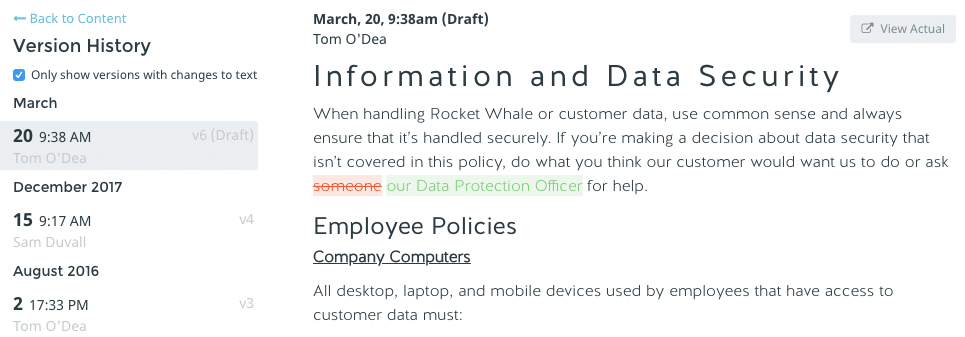
Blissbook collects electronic acknowledgements for handbooks and policies, records the exact content an employee could see when signing, and lets you view or print that content later. Its version history shows a redline comparison of any two published versions of a policy, and its revision history shows who made each edit and when.
When you revise the termination policy, decide whether employees need to acknowledge the new version. A significant change to at-will language, notice expectations, final pay information, or the separation process may justify a new acknowledgement round.
The reporting process matters too. You need to see who’s been notified, who viewed the policy, and who signed it. A reporting system can also help you keep records for former employees rather than losing the acknowledgement trail when someone leaves.

Sample Termination Policy Outline
Use this structure as a starting point. Your final policy has to reflect your company’s practices and specific workforce requirements.
- Purpose and scope
Explain who the policy applies to and what types of separation it covers. - Voluntary separation
State how employees submit resignations, who receives notice, and whether your company has a notice expectation. - Involuntary separation
Describe your general company process and explain that decisions may depend on the circumstances. - At-will employment
Include clear language if your company uses an at-will employment relationship, along with any required limitations or exceptions. - Final pay and benefits
Explain that timing and treatment may vary by state, and identify where employees can ask questions. - Company property and information
Describe how employees return equipment and other company property. - System access and records
Explain that access may end when employment ends and identify any required file or information handoff. - Exit interviews and references
State whether the company may conduct an exit interview and who handles reference or employment verification requests.
Would you rather not draft the whole separation policy yourself? Blissbook’s handbook writing team can create a new handbook or revise the one you have.
Termination Policy FAQs
Does A Termination Policy Need To Include At-Will Language?
No, a termination policy only needs at-will language if it accurately reflects the company’s employment relationship and has been reviewed for the locations where employees work. Have an employment lawyer review the wording before you publish.
Should A Termination Policy Require Two Weeks’ Notice?
A termination policy can state an expected resignation notice period, as long as it separates that expectation from a guaranteed right to work through the notice period. It also helps to tell employees where to ask about exceptions or role-specific practices.
Does Final Pay Have To Be Included In A Termination Policy?
Final pay doesn’t have to be explained in detail, but employees should know where to find accurate information. A short section can direct them to payroll or benefits resources and state that timing varies by state.
Should Employers Put The Entire Termination Process In The Employee Handbook?
No, the handbook only needs the employee-facing responsibilities and general expectations. Detailed approval steps, forms, investigation records, and internal handoffs usually belong in a separate HR process.
Should Employees Sign A Termination Policy?
Employees should acknowledge the version of the handbook or termination policy your company wants them to follow. When the policy changes, HR decides whether the update is significant enough to need a new acknowledgement.

Kamila Lipska
Kamila Lipska is a growth and digital marketing specialist with over 15 years of experience in SaaS and technology. At Blissbook, she focuses on making employee handbook, compliance, and HR communication topics easier to understand, using customer insights, search data, and real-world questions to create practical, useful content.